In the mid-to-late 1990s, the video game industry was a landscape of stark contrasts. On one side stood the Sony PlayStation, a newcomer that embraced the sleek, affordable promise of the CD-ROM. On the other was the Nintendo 64, a powerhouse of 3D technology that clung to the traditional, chunky plastic cartridges known as “Game Paks.” For the average consumer, the most glaring difference between these two worlds wasn’t just the graphics or the loading screens—it was the price tag. While a flagship title on the PlayStation typically retailed for $40 to $50, N64 owners often faced a staggering $70 to $80 bill for a single game. To understand this price gap, one must look past the plastic shell of the cartridge and into a complex web of manufacturing monopolies, logistical gambling, and high-stakes engineering.
A Computer on a Circuit Board
The most immediate driver of the N64’s high retail prices was the physical nature of the medium. A PlayStation disc was little more than a stamped piece of polycarbonate, costing less than a dollar to manufacture. An N64 Game Pak, however, was essentially a miniaturized computer expansion card. Inside every cartridge sat a sophisticated array of silicon, including high-speed Mask ROM chips that allowed the console to communicate with the game data at lightning speeds. Unlike the slow, spinning laser of a CD drive, these chips provided the “instant-on” experience that defined Nintendo’s hardware.
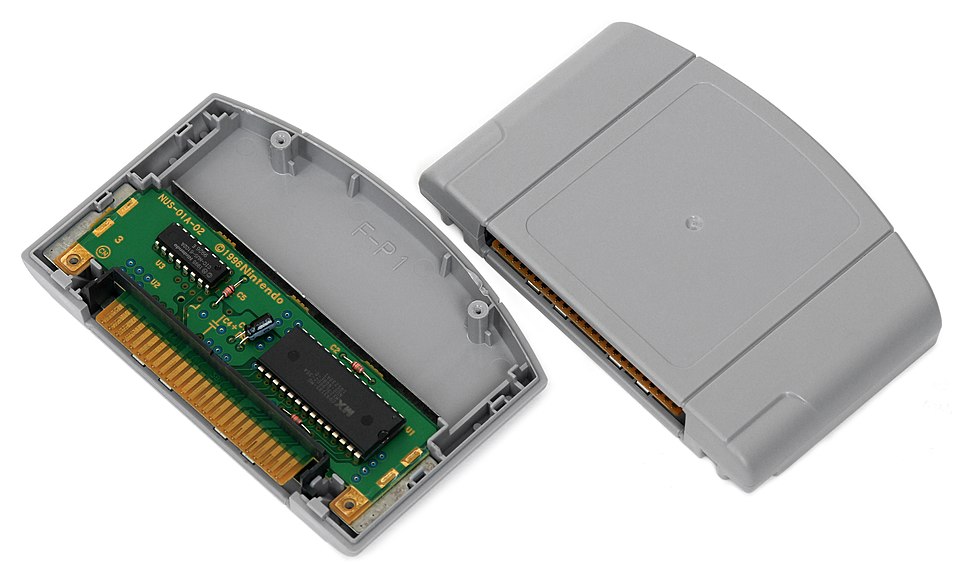
However, this speed came at a literal cost. Depending on the storage capacity, the raw components for a single cartridge could cost between $15 and $30. This meant that before a publisher even considered the costs of marketing, shipping, or profit, they were already starting with a manufacturing deficit that was thirty times higher than their competition at Sony. Furthermore, because the N64 lacked a built-in hard drive or internal memory, many of these cartridges had to include their own onboard save-game hardware, such as EEPROM or battery-backed SRAM, which added even more weight to the production budget.
The High-Stakes Inventory Gamble
Beyond the cost of silicon, the Nintendo 64 was plagued by a logistical bottleneck that forced publishers into a dangerous financial dance. Because CD-ROMs were easy to press, Sony could respond to market demand in a matter of days; if a game sold out on a Monday, new copies could be back on store shelves by Friday. Nintendo’s manufacturing process was far more rigid. Producing Game Paks required ordering specialized silicon months in advance.
This forced publishers to forecast their sales half a year ahead of time. If they underestimated a game’s popularity, they lost out on months of potential revenue while waiting for new chips. If they overestimated, they were left with millions of dollars in expensive, unsold hardware that could not be easily repurposed. To survive this “inventory gambling,” publishers were forced to bake a significant “risk premium” into the retail price, essentially charging the customer more to offset the potential cost of a commercial flop. You weren’t just paying for the game; you were paying for the publisher’s insurance.
The Nintendo Manufacturing Monopoly
The financial pressure was further intensified by Nintendo’s iron-clad control over its ecosystem. During this era, Nintendo acted as the sole manufacturer for all N64 software. Third-party developers like Konami or Capcom could not simply find a cheaper factory to produce their games; they were required to purchase every single cartridge directly from Nintendo. This allowed Nintendo to profit three times over: first as the manufacturer of the physical board, second as the licensor of the software, and third as the gatekeeper of the distribution.
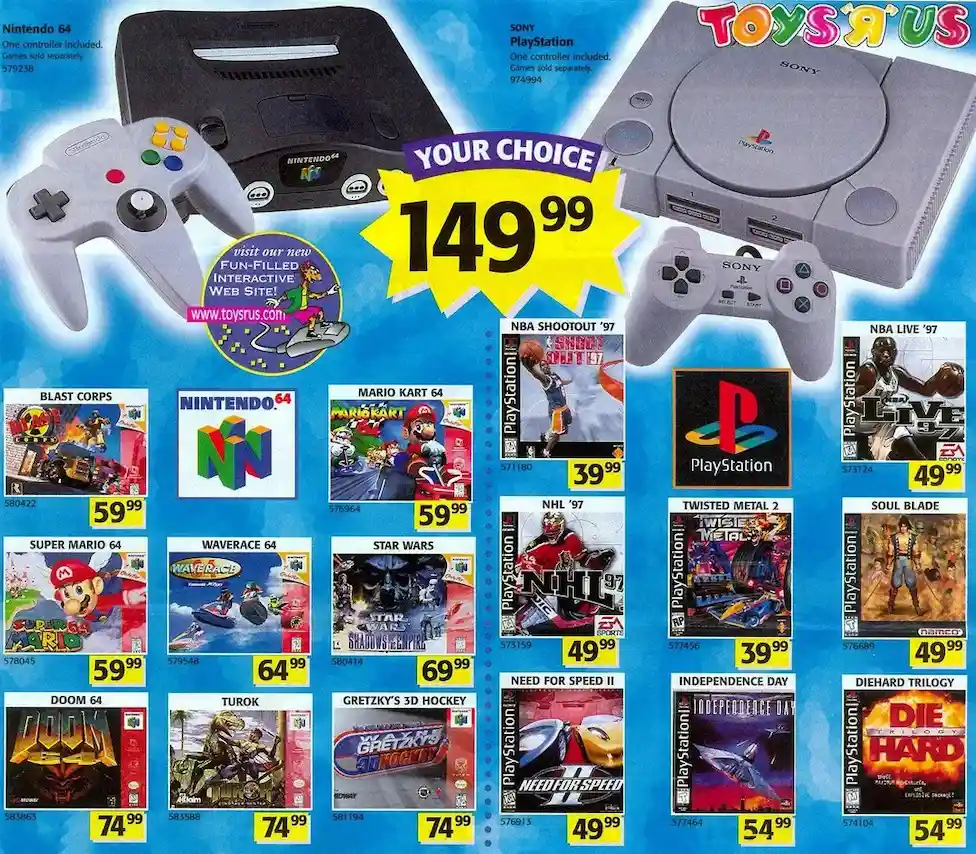
For third-party studios, the margins were razor-thin. After paying Nintendo for the hardware and the licensing fees, many developers found that they had to raise their Manufacturer’s Suggested Retail Price (MSRP) just to see a return on their investment. This economic reality is a major reason why third-party titles on the N64 were often significantly more expensive than Nintendo’s own first-party games like Super Mario 64 or Star Fox 64.
Fitting a Gallon into a Pint
Finally, there was the “engineering tax.” The technical limitations of the cartridge created a hidden development cost that was passed on to the consumer. A standard CD-ROM could hold 700 MB of data, while most N64 cartridges were limited to a mere fraction of that, ranging from 8 MB to 64 MB. To fit a cinematic experience into such a tiny space, developers had to hire elite programmers to write custom compression tools and specialized microcode.
Every kilobyte was a battleground. While PlayStation developers could afford to be “wasteful” with large video files and uncompressed audio, N64 developers spent months hand-optimizing code to fit a massive 3D world into a tiny chip. This extra R&D time added months to development cycles and required specialized talent, further bloating the budgets of games that were already physically expensive to produce. The high price tag was, in many ways, a fee for the creative genius required to overcome the N64’s storage constraints.
There are a number of things we can — and are in fact doing. One is a reduction in manufacturing cost. This is still cartridge. It is not CD-ROM. We will not be able to get down to the CD-ROM pricing model, but we are doing things to reduce the price of cartridges. – Howard Lincoln in an interview with IGN (1998)
The Physical Weight of the Market
An interesting, often forgotten detail is that N64 game prices weren’t just high; they were unstable. Because the cartridges relied on the global semiconductor market, prices could fluctuate based on the availability of raw silicon. During a global shortage of RAM chips in the late 90s, the cost of manufacturing the more advanced N64 Game Paks spiked. Unlike the fixed costs of a CD, the N64 was tied to the volatility of the tech hardware market, occasionally leading to “surge pricing” where certain titles cost more in one month than the next.
The Final Fantasy Exodus
Perhaps the most famous casualty of the N64’s high production costs was Nintendo’s relationship with Square (now Square Enix). For years, the Final Fantasy series was synonymous with Nintendo. However, when Square began developing Final Fantasy VII, they realized the game’s cinematic ambitions—specifically the high-quality FMV (Full Motion Video) cutscenes—would require dozens of N64 cartridges to fit the same data as three cheap PlayStation CDs. The cost to produce such a game on the N64 would have made the retail price astronomical, forcing Square to jump ship to Sony. This single move shifted the balance of power in the console wars for over a decade.

A Legacy of Uncompromising Engineering
In retrospect, the high price of Nintendo 64 games was the cost of a specific vision of quality. Nintendo traded affordability and storage space for durability and speed. While gamers of the 90s paid a steep premium for their hobby, they received software that was virtually indestructible and free from the immersion-breaking loading screens that defined the disc-based era. It was a trade-off that defined a generation, and while it eventually led many developers to flee to the cheaper shores of the PlayStation, it cemented the N64’s legacy as a console of uncompromising—if expensive—engineering.