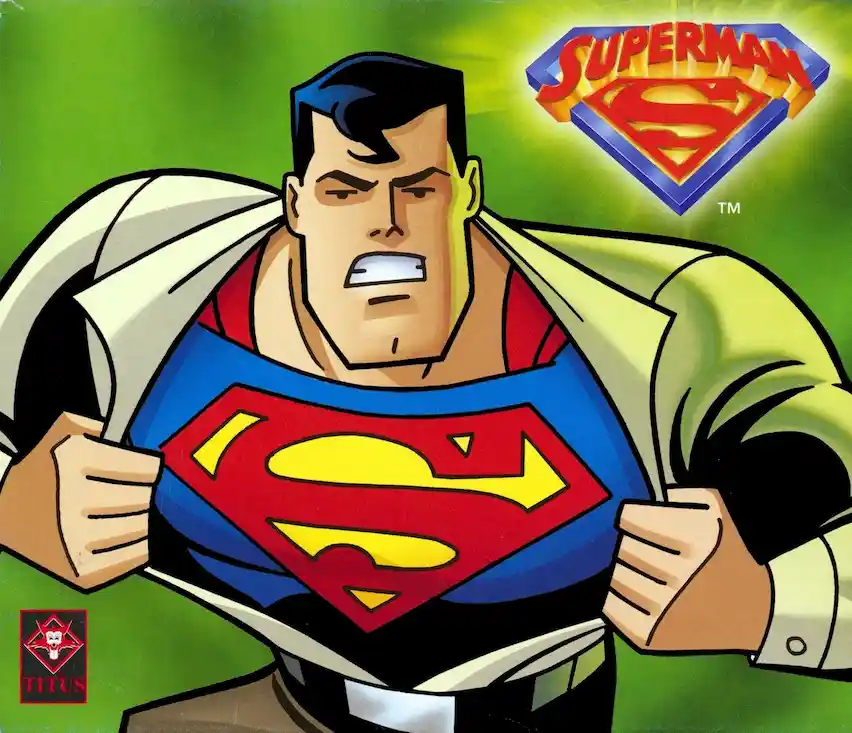
For over two decades, Superman for the Nintendo 64—unofficially dubbed Superman 64 by the press as early as 1997—has been the ultimate punchline in gaming history. Famous YouTubers and critics have built entire careers on ridiculing the game, portraying Titus Interactive as an incompetent studio. However, a deep dive into the development history, marketing cycle, and industry reception reveals that we have done Titus a massive injustice. Far from a lazy cash grab, the project was a victim of an ambitious vision systematically dismantled by corporate interference and a “licensing nightmare.”
The Titans of French Gaming: The Caen brothers
To truly understand the weight of the Superman 64 story, it is essential to recognize the man behind the ambition. Éric Caen was not just an executive; he was a titan of the early French software industry. Alongside his brother Hervé, Éric co-founded Titus Interactive in 1985.

At a time when the video game world was shifting from 2D sprites to complex 3D environments, Caen positioned Titus as a pioneering force in Europe. He was an expert in 3D mathematics and optics—fields he believed required a far more sophisticated level of logic than traditional game design. Under his leadership, Titus became a rare European success story on the global stage, mastering the technical hurdles of the Game Boy, SNES, and eventually the Nintendo 64 with hits like Automobili Lamborghini.
1996–1997: A Visionary Hunt for a Legend
“When we acquired the rights for… Superman, their brands weren’t particularly on trend at the time, but we knew what to do with them.”
Eric Caen
The journey began in late 1996. While working in the Titus offices in Los Angeles, Éric Caen learned about the upcoming Superman: The Animated Series. Sensing a massive opportunity that other companies had ignored, Caen aggressively pursued the rights. Warner Bros. was so surprised by his interest that they reportedly asked him three times if he truly knew what he was getting into.
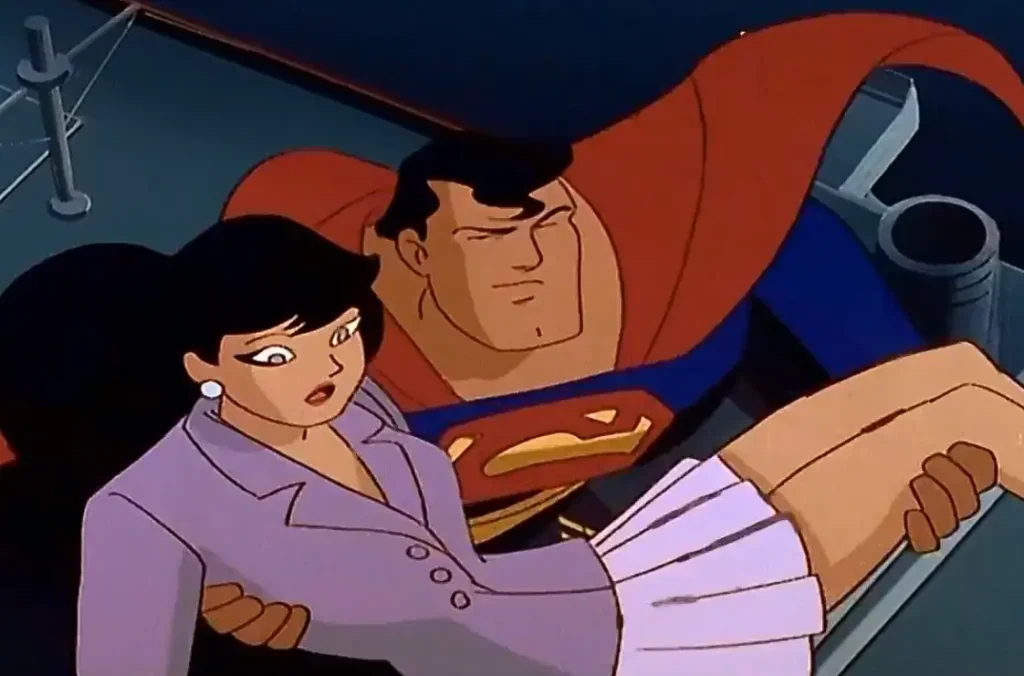
By early 1997, Titus signed a license agreement to bring the Man of Steel to the Nintendo 64, PlayStation, and Game Boy. While the Game Boy version was completed quickly, the N64 project was destined for a much more grueling path. Caen’s original plan was a ground-breaking 3D open-world action-adventure that incorporated real-time strategy elements—a feat only Tomb Raider had attempted at the time. “It was designed to push the Nintendo 64 to its absolute limits,” Caen explained in an Interview with IGN, intending to let players truly feel like a superhero.
1997–1998: The Hype and the “E3 Showstopper”
The early reception was surprisingly positive. At E3 1997, the game was unveiled not as a VR simulator, but as an epic struggle against Lex Luthor’s “Lexoskel-5000,” showcasing Superman’s X-ray vision. Animation World Network praised the “stunning 3D environments,” and by 1998, GameFan claimed it could rival Zelda and Banjo-Kazooie. GamePro even labeled it an “E3 Showstopper.” Previews touted a promising four-player battle mode compared to Star Fox and detailed powers like heat vision and ice breath. Behind this optimistic marketing, however, a corporate war was brewing.
The Development Nightmare: From Hero to Mayor
The optimism of 1997 was shattered just days after the contract was signed when the licensing team at Warner Bros. changed. According to Caen, this new group took an instant dislike to Titus and spent the next two years trying to kill the project. Their first absurd demand was to scrap the action game and turn it into a Sim City-style simulation where Superman acted as the mayor of Metropolis.
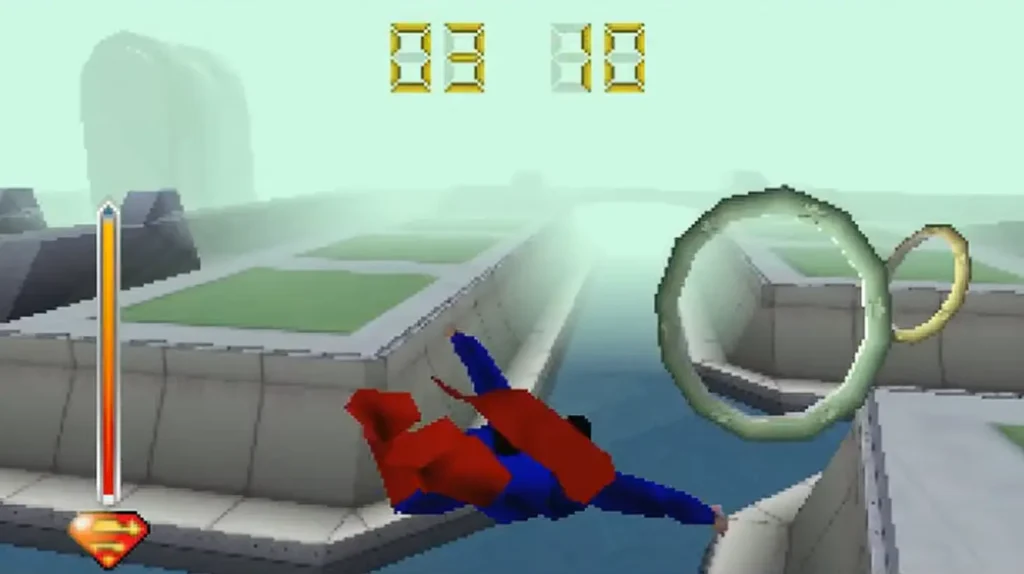
When Titus refused, the relationship became adversarial. Warner Bros. began blocking almost every creative decision, even demanding proof from original comics that Superman was capable of swimming. To satisfy their demand that Superman never harm “real” people, Titus was forced to set the game in a “virtual world.” This mandate is why the hated ring-levels became the core gameplay loop; originally intended only as tutorials, they were expanded to fill the void left by combat and exploration elements that Warner Bros. had stripped away.
1999: The Final Compression and the “Ten Percent” Reality
“Throughout Superman’s development, Warner was a nightmare and, well, you’ve seen the result.”
Eric Caen
By early 1999, the team was exhausted. Titus announced in March 1998 that the game was 85–95% complete, yet constant interference pushed the release to May 1999. Because it took “months to get every single character approved,” the developers ran out of time to fix mounting bugs and control issues.
Even with late-stage technical support from Nintendo, the damage was done. By the time of its May 1999 release, less than ten percent of the original 1997 design remained in the game. The ambitious open-world mechanics were gone, replaced by tutorial rings and a “Kryptonite fog” used as a desperate technical fix to keep the frame rate stable on the 16MB cartridge.
The Critical Fallout: A “Super-Disappointment”
Upon release, the press reaction was devastating. Critics labeled Superman 64 one of the worst games ever made. IGN’s Matt Casamassina stated it was “so poorly executed that it actually serves to ruin the reputation of the prominent action hero.” The controls were panned as unresponsive, with N64 Magazine famously complaining that “the only way to stop flying is to hit a solid object.”
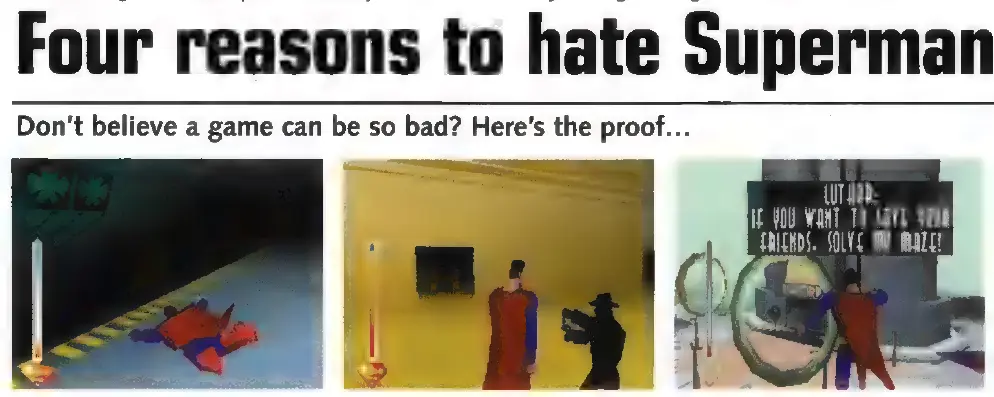
Technically, the game was a minefield of glitches and abysmal AI. The excessive distance fog was mocked as a lazy excuse, and Metropolis was described as “flat” and “characterless.” Even the sound didn’t escape criticism; GameSpot noted the soundtrack was so repetitive it “would be considered bad for the SNES.” Despite the carnage, a few reviewers saw the potential; Official Nintendo Magazine lamented that the game was “packed with great ideas” but ultimately a “Super-disappointment.”
A Legacy Re-evaluated and the PlayStation Settlement
“Despite everything, it still made us some money.”
Eric Caen
Despite the critical slaughter, Superman 64 was a staggering financial success. Backed by a massive marketing campaign, it became the third best-selling title in North America in May 1999 and a top-ten hit through June.
By the end of its life cycle, the game had moved over 500,000 units. For Titus, a mid-sized European publisher, this was a massive win. As Caen pragmatically notes, “despite everything, it still made us some money.” The high sales figures suggest that the “Titan of the Industry” was right about the market’s hunger for a 3D Superman; they were simply robbed of the opportunity to deliver the quality that hunger deserved.
The story reached a final, bitter conclusion when Titus hired BlueSky Software to redesign the game for the PlayStation. Though Sony approved it, the Warner Bros. license expired and was not renewed, killing the project in 2000. In a rare admission of fault, Warner Bros. reportedly planned a settlement payment to Titus to compensate for their “abusive behavior” during development. History remembers Superman 64 as a failure of talent, but the facts prove it was a failure of corporate cooperation.
Overextension and the 2005 Collapse
Contrary to popular myth, Superman 64 was not responsible for the downfall of Titus—it was the financial engine that funded their final growth. Flush with profits, the Caen brothers embarked on an aggressive expansion, acquiring majority control of the legendary American publisher Interplay Entertainment between 1999 and 2001.
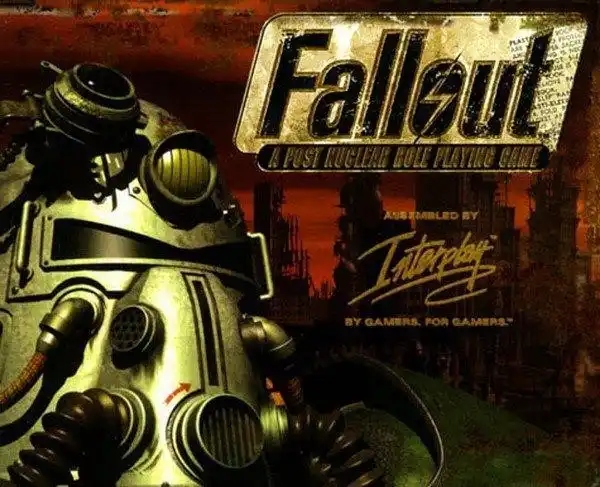
This move granted them iconic franchises like Fallout, but it also saddled Titus with Interplay’s staggering debts. The financial burden of managing a crumbling American giant proved fatal. By 2004, the company was drowning in over €30 million of debt, leading to bankruptcy in January 2005. Superman was the critic’s scapegoat, but the fall of Titus was a self-inflicted economic drama caused by overextending far beyond their means.
History may remember the ‘nightmare’ of the development, but we shouldn’t forget the impact. Titus was a cornerstone of the European gaming scene in the 90s—a bold, ambitious company that proved Europe could compete on the global stage. For that alone, they deserve our respect.
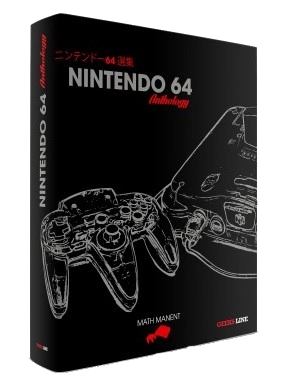
Excerpts and insights from the interview with Éric Caen are quoted from the “N64 Anthology” published by Geeks-Line. For the full, deep-dive interview and more untold stories of Nintendo history, I highly recommend picking up the book.